What is a tea pet?
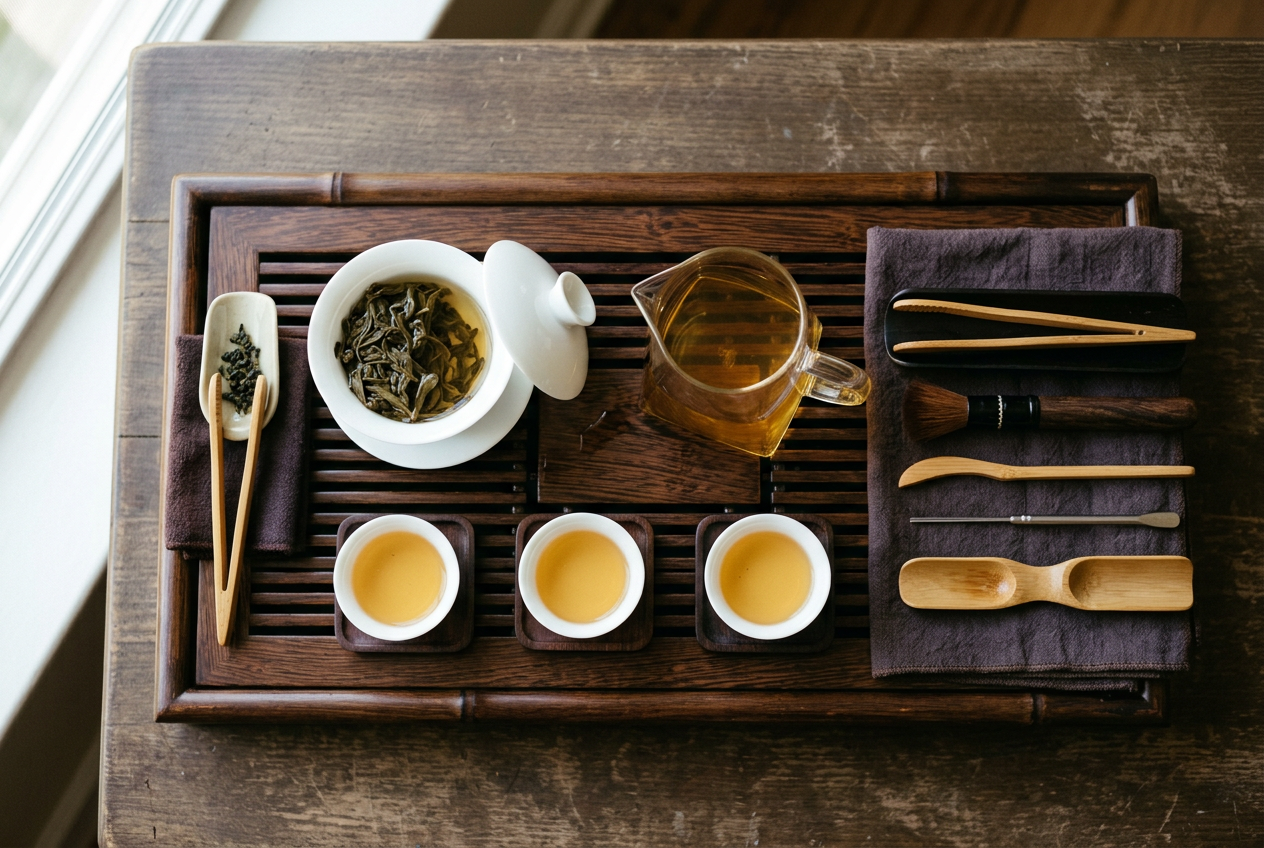
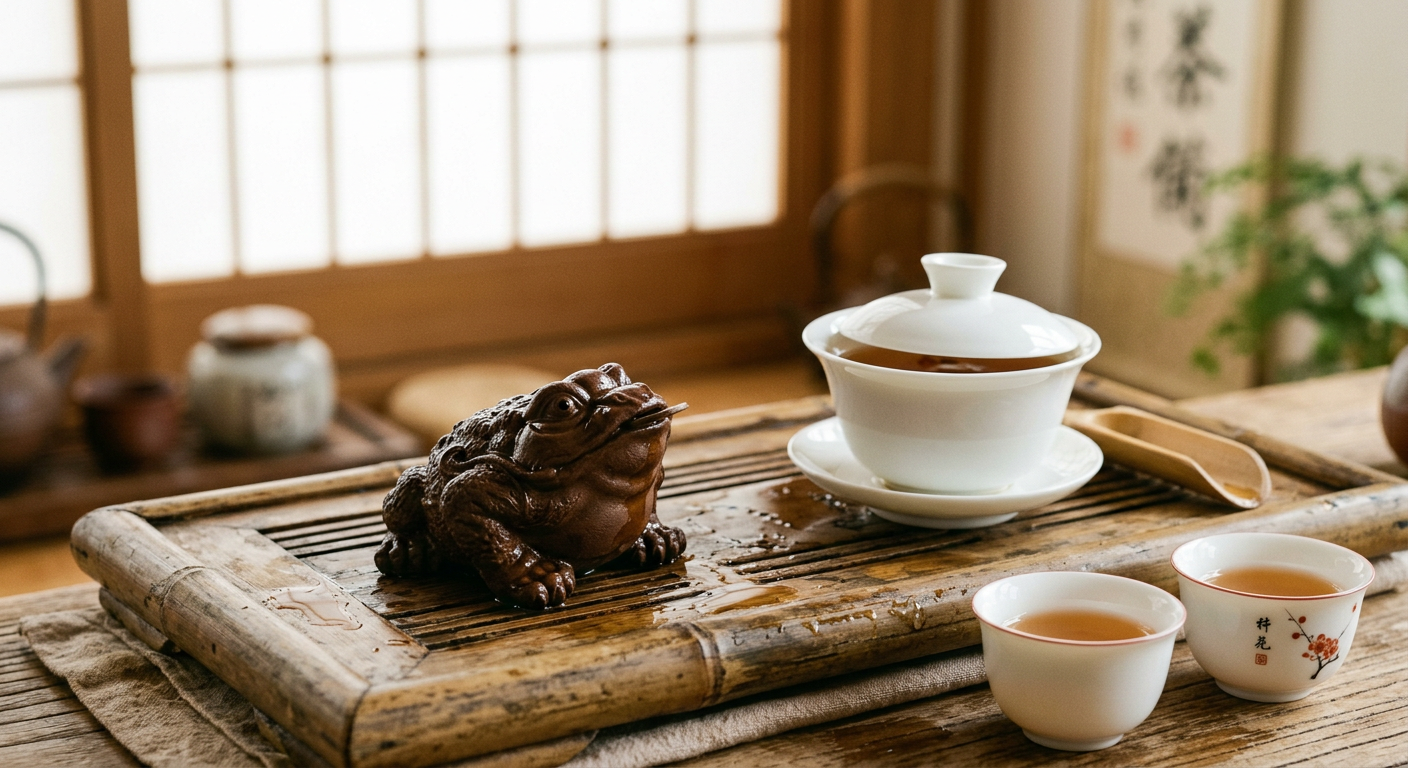
Picture a small bamboo tea tray at the end of a Gongfu Cha session. Steam still rises from the gaiwan. The host lifts the fairness pitcher and, instead of sending every last drop into the cups, tips the warm rinse over a tiny clay toad sitting beside the pot. The figurine darkens instantly, as if it too has taken a sip. That small creature is a tea pet (茶宠, cháchǒng) — the quiet companion of Chinese tea drinkers[source:1].
A tea pet, sometimes called a “tea lover’s pet” or chá wán (茶玩, “tea plaything”), is a small pottery figurine kept on the tea tray[source:1][source:2]. Most are made from the same Yixing purple clay, or zǐshā (紫砂), used for celebrated teapots[source:1]. They are usually left unglazed, with a rough, earthy surface that invites the tea to sink in rather than run off. Over months and years the repeated bathing in tea liquor deepens their color and leaves a gentle tea fragrance in the clay[source:1][source:2]. Some drinkers keep a tea pet simply as a good-luck charm; others treat it as a living record of every session.
Tea pets also make popular gifts among tea drinkers. Because they improve with use, giving one carries a gentle wish: may the recipient enjoy many slow sessions and watch the clay grow more beautiful with time.
Why Yixing clay matters
The story of tea pets begins in Yixing, a city in Jiangsu province that has been famous for its clay since the Song dynasty (960–1279 CE)[source:1]. As Yixing teapots grew in reputation, local potters began shaping leftover clay into small animals, mythic beasts, and figures for the tea tray. Production remains centered there today[source:1].
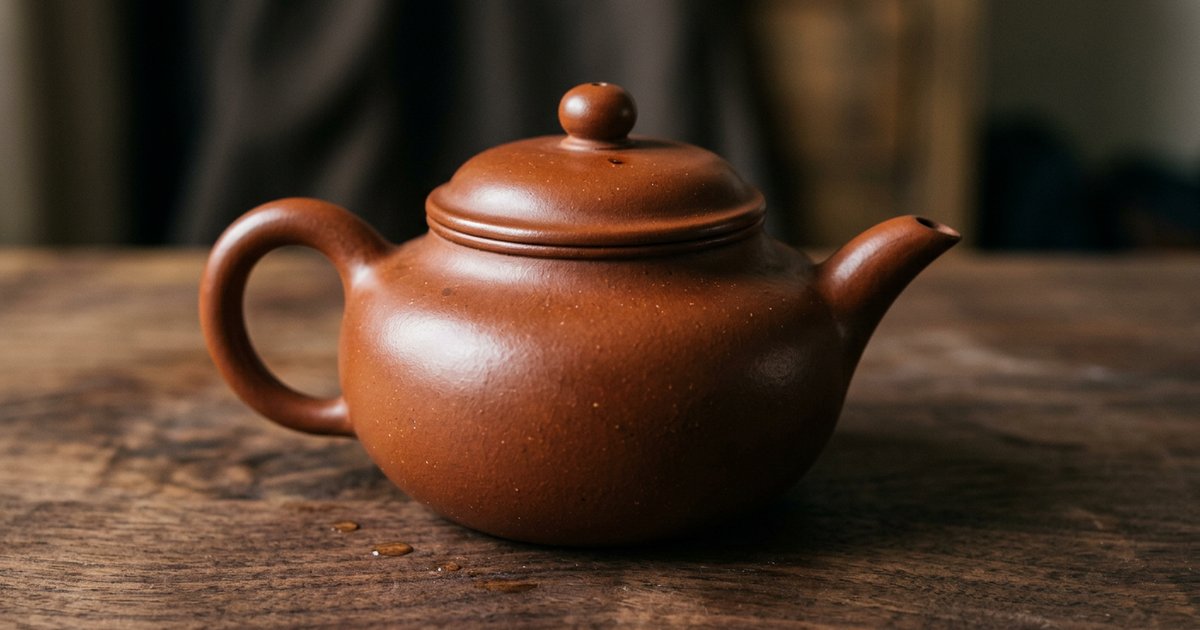
The same properties that make Yixing clay ideal for teapots make it perfect for tea pets. Zisha clay has a dual-pore structure — tiny pores inside the particles and larger pore clusters between them — that gives it breathability without leaking water. The unglazed surface is slightly porous, allowing it to absorb aromatic compounds and tea oils from each pour[source:1][source:2]. At first the figurine looks dry and muted; with regular rinsing it begins to glow with a soft, jade-like luster known as tea patina. The process cannot be rushed. Like seasoning an Yixing pot, raising a tea pet is a slow conversation between clay, leaf, and time.
Choosing a tea pet
Tea pets come in nearly every shape a tea drinker might wish for company. Traditional models include the animals of the Chinese zodiac, mythical creatures such as dragons and phoenixes, and revered figures like Guanyin, Maitreya, or Zhuge Liang[source:1][source:2]. Each design carries its own blessing. A three-legged toad or frog is a classic symbol of wealth and prosperity; a dragon stands for power and good fortune; a pixiu is believed to guard riches. The pet you choose often says less about fashion and more about what you hope to cultivate at your tea table.
Color and texture matter too. Authentic zǐshā tea pets are usually monochromatic — warm reds, browns, or buff tones — and feel rough rather than glossy[source:1]. Some are made from other unglazed clays, such as Nixing stoneware, but the principle is the same: the surface must be able to drink the tea. If the figurine is glazed slick or painted in bright, artificial colors, the tea cannot penetrate it and the pet will never develop a true patina. For that reason, purists look for plain, unglazed clay and a shape that pleases them enough to sit with for years.
Size is practical as well as aesthetic. A tea pet should sit securely on the tray without tipping when water flows around it, and it should be small enough that it never blocks the path of the pitcher. Many experienced hosts place the pet where guests can see it easily, turning the small figure into a natural conversation piece.
How to raise a tea pet
“Raising” a tea pet means pouring tea over it so the clay slowly absorbs the liquor and develops character. The method is simple, but the patience required is the point.
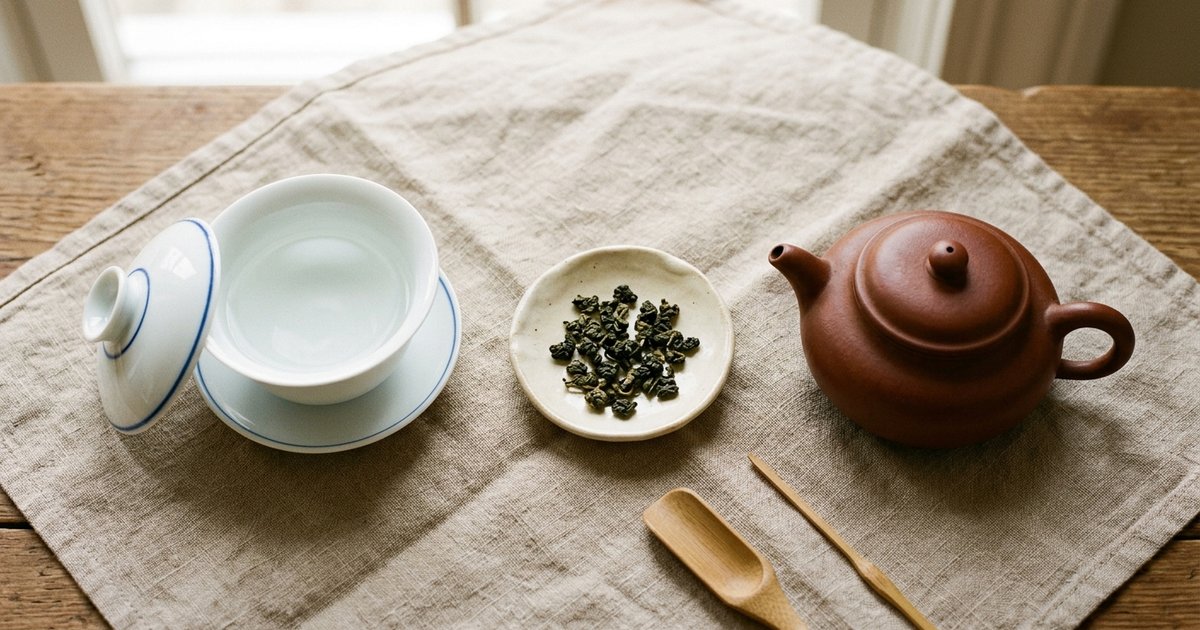
Start by placing the pet on your tea tray or tea boat before you brew. During the warming rinse and the awakening rinse of the leaves, pour the spent water gently over the pet rather than letting it run to waste. Some drinkers also brush the pet with the tea liquor using a soft brush, encouraging an even coat. Use the same family of tea — oolong, pu-erh, or black — session after session; mixing wildly different aromas can leave confused layers in the clay, much like mixing teas in an Yixing pot[source:1]. A heavily smoked Lapsang Souchong, for example, could haunt a delicate oolong pet for weeks.
Clean the pet only with hot water. Never use detergent or soap, which will strip away the accumulated tea oils and leave a chemical residue[source:2]. After each session, let it air dry naturally, lid off if it has one, in a ventilated spot away from cooking fumes, perfume, or hand cream. Zisha clay absorbs odors as readily as it absorbs tea, and a stray smell can stay for a long time.
If you travel or stop brewing for a while, let the pet dry completely before storing it in a breathable cloth bag. A damp pet left in a closed box can develop an unpleasant musty smell that is hard to remove. When you return, simply resume pouring; the clay will forgive the interruption and continue its slow progress.
The transformation is gradual. After a few weeks the surface will look slightly richer; after a year it may begin to feel smooth and smell of tea even before water touches it. There is no finish line. The pet simply records every session in its sheen.
“A tea pet does not speak, but it remembers every pour.”
Playful tricks and modern variations
Not all tea pets are quiet. One of the most popular traditional models is the “pee-pee boy,” a small figure that, after being soaked in cold water and then showered with hot water, squirts a jet of water from its mouth[source:1]. The trick relies on a hollow cavity and the thermal expansion of the trapped air and water; in the past, the height of the squirt was even used as a rough way to judge whether the water was hot enough for tea[source:1]. Other tea pets are designed to bubble, spout, or change posture when hot liquor is applied.
These playful pieces are especially welcome when children or newcomers join a session. The small jet of water breaks the formality of the tray and reminds everyone that Gongfu Cha, for all its precision, is ultimately a social pleasure.
In recent years, modern resin tea pets that change color with temperature have appeared on the market[source:2]. They are fun and inexpensive, but they do not absorb tea or develop a patina. For a lasting companion, unglazed clay remains the choice of serious tea drinkers.
Conclusion: a quiet companion
A tea pet is not required for Gongfu Cha. A gaiwan, good leaves, and hot water are enough. But the small figure on the tray adds something the essentials cannot: a sense of continuity. It is there for the early-morning solitary steep and the late-night conversation with friends. It grows darker, smoother, and more fragrant as your own palate learns to read the tea.
If you are unsure where to begin, a simple clay toad or a small pixiu is a forgiving first pet. It asks for nothing except the rinse water you would otherwise discard, and it rewards years of steady attention with a quiet, personal luster.
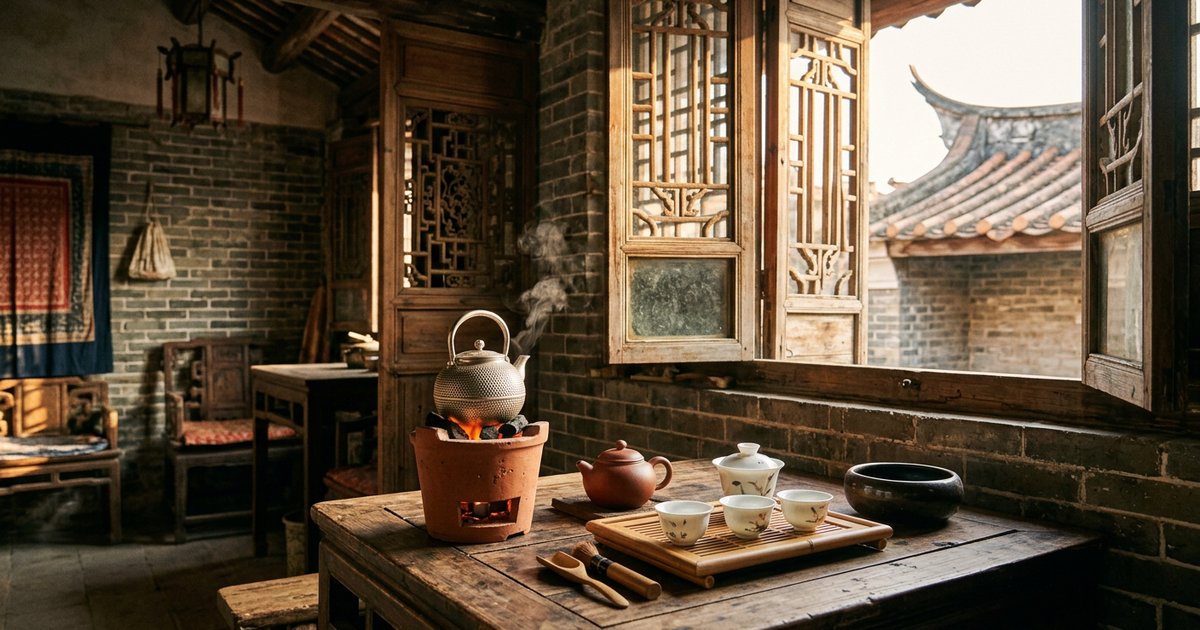
In 2022, traditional Chinese tea processing techniques and associated social practices were recognized by UNESCO as Intangible Cultural Heritage of Humanity[source:3]. The tea pet, in its modest way, is part of that living tradition — a small clay witness to the patience, hospitality, and quiet pleasure that define Chinese tea culture. Choose one you like, pour faithfully, and let it age beside you.