One lifetime, many teas
When beginners first buy an Yixing teapot, they often ask the shopkeeper: "What tea can this pot brew?" The usual answer is: "It is best to dedicate it to one kind of tea."
This sounds like a folk rule, even a bit fussy. But "one pot serves one tea" is actually determined by the physical properties of zisha clay. Once you understand that, the rule no longer feels like a burden.
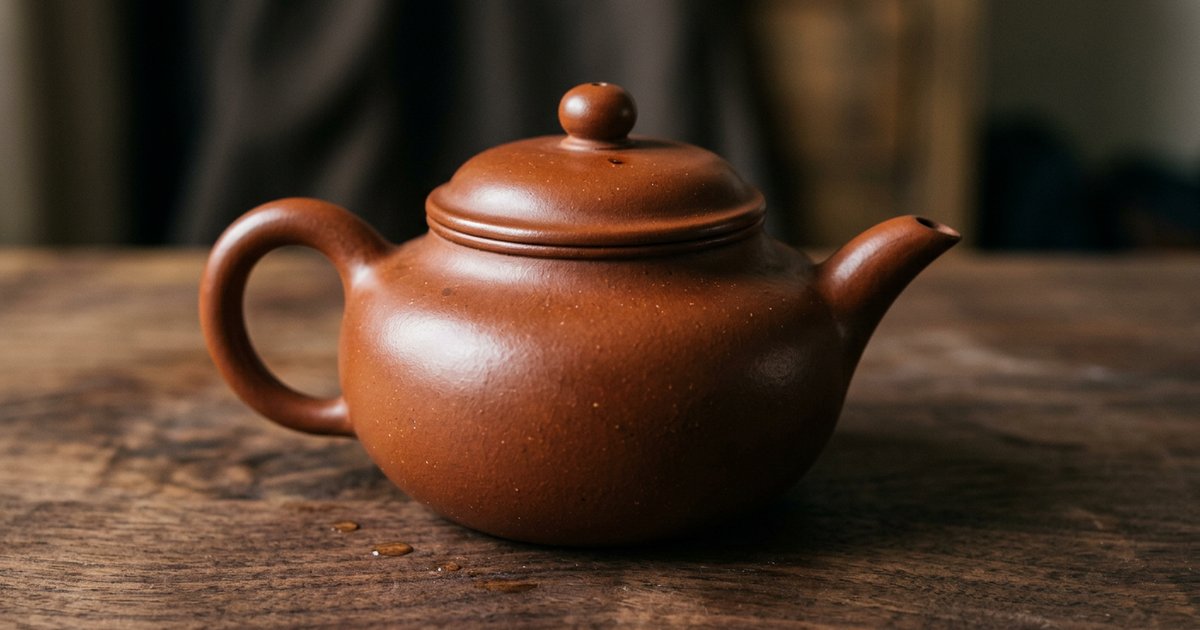
Yixing clay teapots originated in Dingshu Town, Yixing, Jiangsu, during the Zhengde reign of the Ming dynasty[source:1]. In 2006, Yixing zisha pottery making was inscribed on the first national list of intangible cultural heritage, project number Ⅷ-1[source:3]. For centuries, the people of Yixing made pots from this local clay not for appearance alone, but because it genuinely makes tea taste better.
Breathing clay
The secret of zisha clay is its dual-pore structure[source:2]. Under magnification, zisha clay contains two kinds of pores: small pores inside the particles, and open pore clusters around the particles. This gives Yixing teapots breathability without leaking water[source:1].
This structure brings three direct benefits:
- Good heat retention. The sandy clay conducts heat slowly, so the water cools slowly after pouring — ideal for oolong and pu-erh, which need high temperatures.
- Breathable but not porous. The liquor can "breathe" inside the pot without developing stale odors.
- Flavor absorption. The pores absorb aromatic compounds and tea polyphenols from the liquor[source:1].
The third point is the root cause of "one pot serves one tea."
Tea patina
After brewing in an Yixing pot a few times, you will notice the inner walls growing darker, and sometimes even a faint tea fragrance rises when you pour in hot water. This is not poor washing; it is "tea patina," formed as the pot walls absorb tea juice.
Tea patina is the pot's "memory layer." If you use the same pot for the same kind of tea over a long time, the absorbed aromas become increasingly unified and stable. The liquor brewed in that pot becomes softer and fuller than in a new pot.
The ancients described a well-seasoned Yixing pot as "purple jade without, green cloud within" — referring to the warm luster outside and the tea breath within[source:1].
Why mixing flavors is a mistake
Since the pot absorbs flavor, mixing different teas in the same pot creates an obvious problem.
Imagine: today you brew a heavily smoked Lapsang Souchong in the pot, and tomorrow a fragrant Tieguanyin. The pot walls still hold yesterday's smoke, so today's Tieguanyin picks up an aroma that does not belong to it. Neither tea is served well.
So "one pot serves one tea" is not formalism. It is a way to keep the pot's memory pure. The purer the pot, the more it can amplify one tea's strengths.
One pot, one tea in practice
If your budget is limited and you own only one pot, you do not need a separate pot for every tea. Just divide by tea family:
- Oolong pot: for Tieguanyin, Da Hong Pao, Phoenix Dancong, and other high-aroma oolongs.
- Pu-erh pot: for raw and ripe pu-erh, post-fermented teas.
- Black tea pot: for Keemun, Dianhong, and other fully oxidized teas.
What you should not mix are tea families with very different aromas. A floral oolong and a smoked black tea should not share a pot; but two oolongs such as Tieguanyin and Da Hong Pao can usually share one.
When a new pot arrives, there is no need to "open" it by boiling it with tofu, sugarcane, or tea leaves. These folk methods have no scientific basis and may introduce off-flavors. The correct approach is to rinse the pot inside and out with boiling water a few times to remove kiln heat and surface dust, then simply brew the tea family you intend to use it for three to five times[source:2]. For a complete beginner-friendly walkthrough, see how to season a Yixing teapot.
Four seasoning habits
A good pot is more grown than made. Four daily habits matter:
- Rinse right after use. Wash the pot inside and out with hot water; do not use detergent. Detergent destroys the tea-oil layer and the fragrance already absorbed in the walls[source:2].
- Dry and air. Wipe the body with a soft cloth, leave the lid slightly ajar, and let the pot dry naturally in a ventilated place. Do not let it sit in water.
- Avoid grease. Yixing clay absorbs strongly. Once it picks up cooking fumes, hand cream, or food smells, they are hard to remove. Wash your hands before brewing.
- Use it often. The pot is not afraid of use; it is afraid of neglect. Two sessions a week is far better than one session a year.
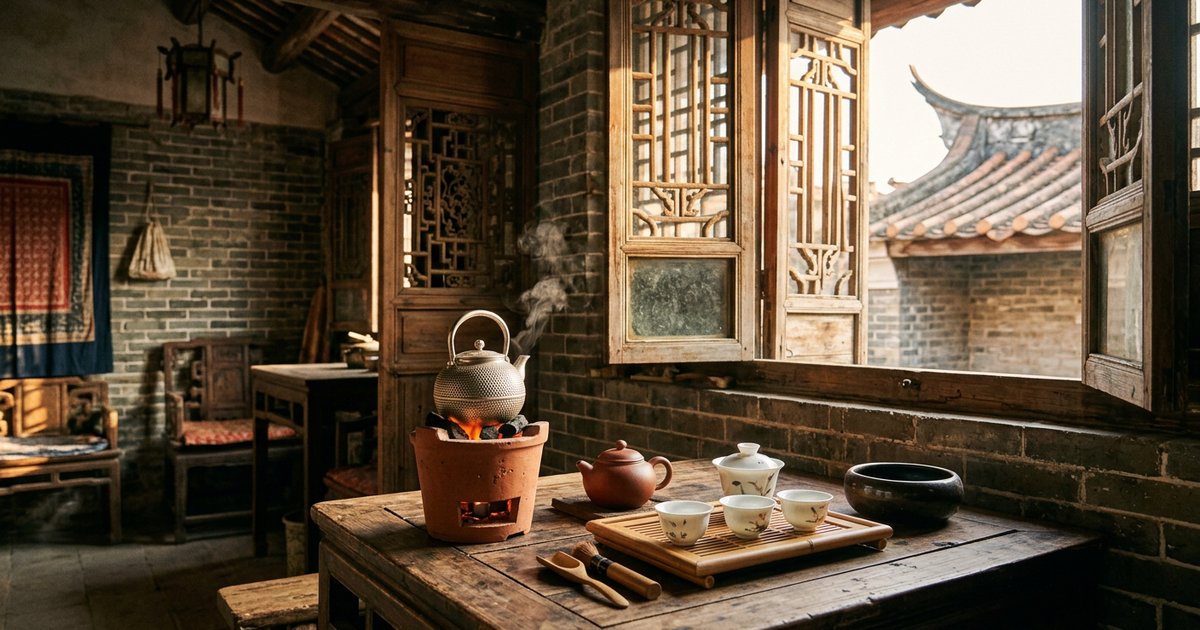
Chaozhou Gongfu Cha speaks of "clay stove with live fire, sand kettle drawing water." In modern life, a well-seasoned Yixing pot is the continuation of that slow craft[source:4].
The pot seasons the tea
"One pot serves one tea" sounds as if the vessel is choosing the tea. In reality, the person is choosing a kind of focus. When you are willing to dedicate one pot to one tea family and use it day after day, you are not only seasoning the pot; you are training your own understanding of that tea.
An Yixing teapot is not a disposable product. It is a vessel that grows more personal with use. Ten years from now, the tea brewed in that pot will be completely different from the first time you used it — because the pot now holds ten years of your tea memory.