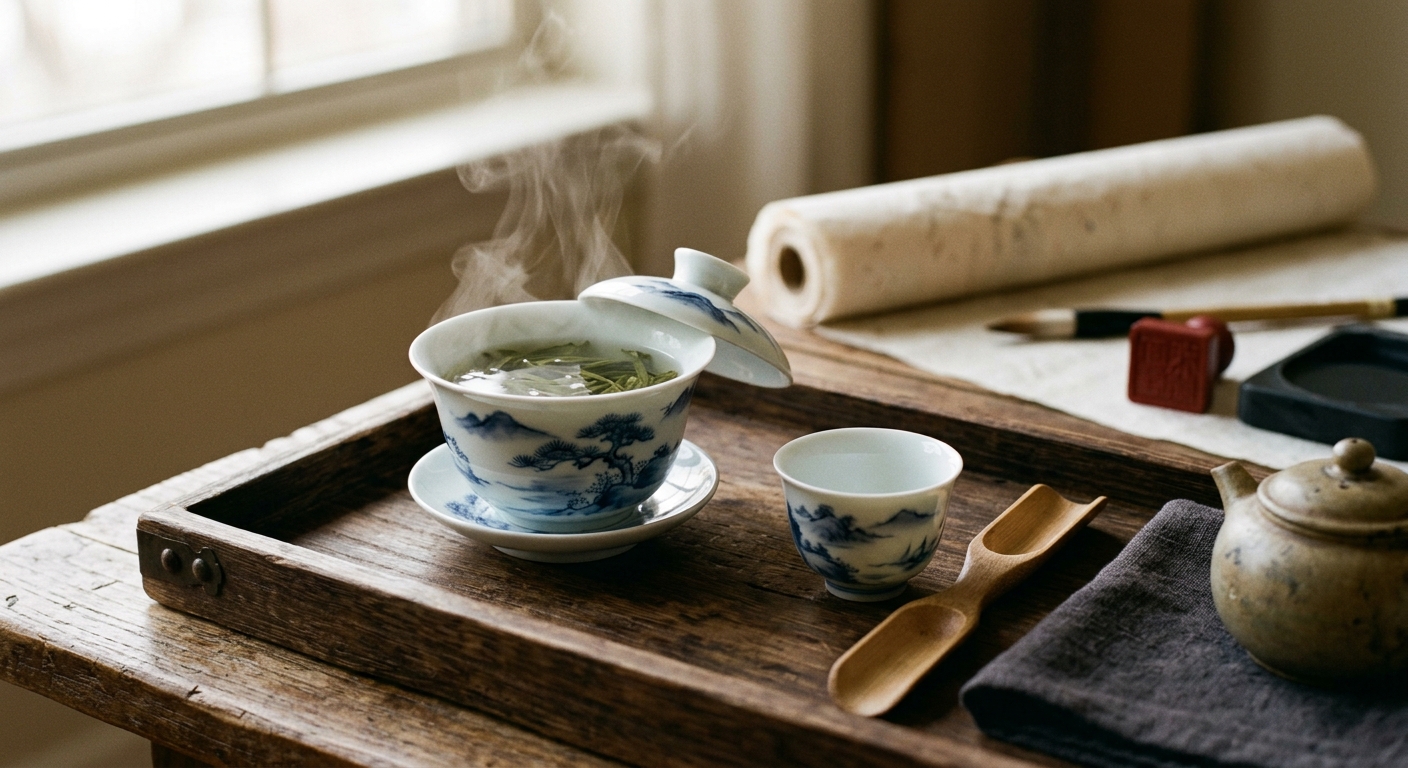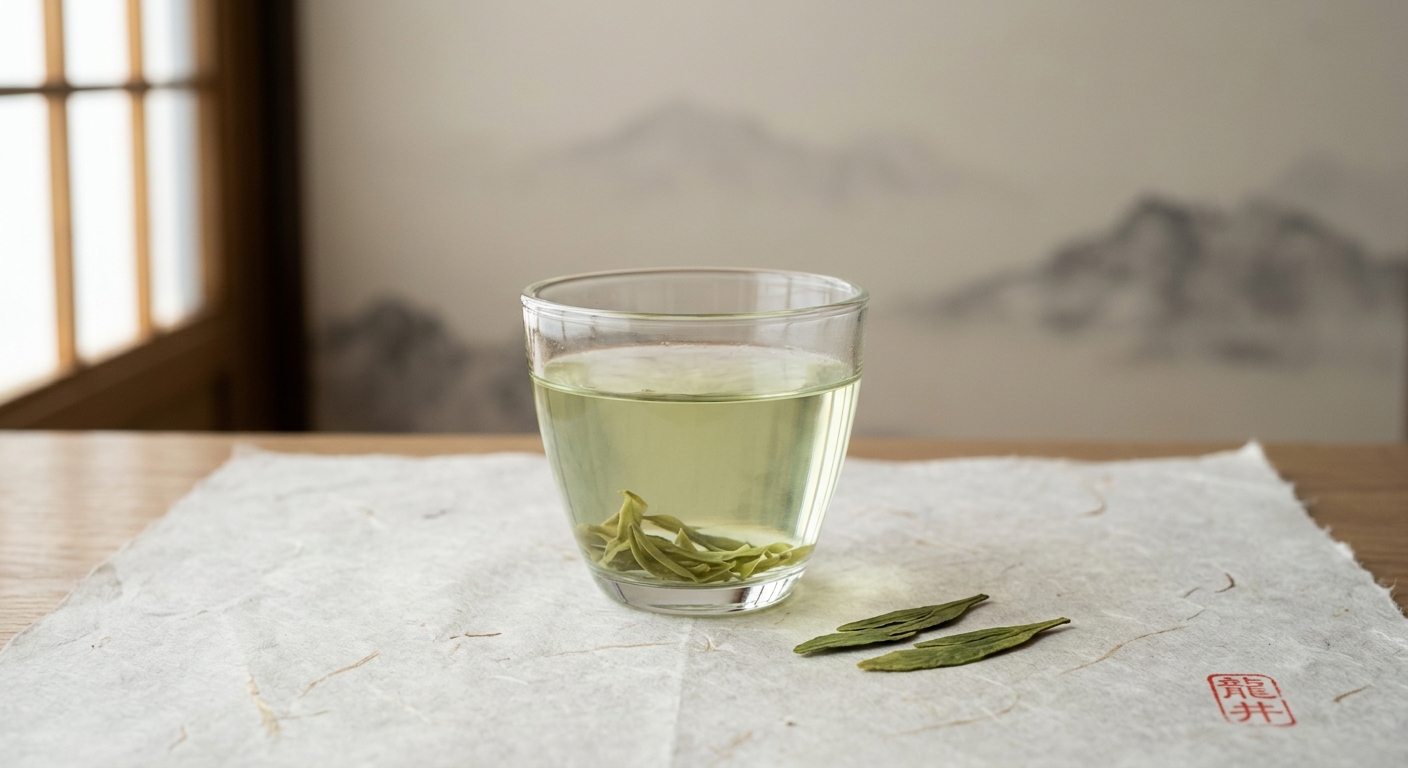
In the hills above Hangzhou, where the West Lake mist lingers until mid-morning, the first flush of Longjing is picked before Qingming and carried down narrow paths in bamboo baskets. By afternoon the leaves are shaking in a hot wok, their fresh-cut-grass smell deepening into something warmer, nuttier, more composed. A few days later, in kitchens far from those hills, someone will open a small foil packet, drop the flat jade leaves into a glass, and pour water that is almost — but not quite — boiling. That small act of restraint is the whole secret of how to brew green tea.
What green tea actually is
All tea comes from the same plant, Camellia sinensis. What makes a tea "green" is what happens after the leaf is plucked. While oolongs and black teas are allowed to oxidize, green tea is heated quickly to stop the enzyme that turns leaves brown[source:1]. The Chinese call this step shaqing (杀青), "killing the green." After that comes rolling and drying, and the leaf keeps the color and chemistry of spring.
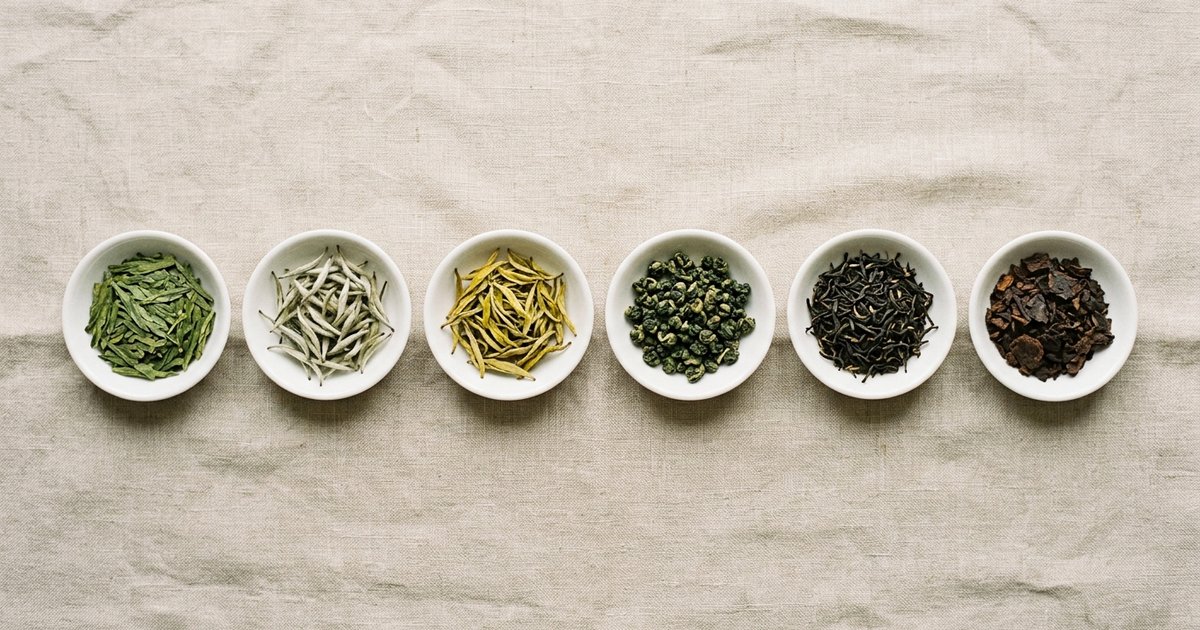
This makes green tea the oldest and most straightforward of China's six tea families — green, white, yellow, oolong, red, and dark[source:3]. It is also the most widely produced tea in China; in 2014 alone the country grew roughly 1.42 million tons of it[source:1]. Loose-leaf green tea has been the daily drink of choice in China since at least the Southern Song dynasty[source:1], long before the West learned to call it "green."
The main processing styles today are pan-fired, baked, steamed, and sun-dried[source:2]. In China, pan-firing in a dry wok at around 120 °C is the dominant method, giving classics like Longjing their toasty, bean-like depth. Japan, by contrast, still steams most of its green teas, which is why sencha tastes brighter and more grassy[source:1]. Both are green teas; both obey the same brewing logic.
The leaf does not ask for drama. It asks for water a little cooler than you think, and a hand a little steadier than usual.
Why green tea asks for gentleness
A green tea leaf is full of tender buds and young leaves. Those leaves hold amino acids for sweetness, catechins for structure, and volatile oils for fragrance. Heat decides the order in which these dissolve. Pour boiling water on a delicate green and you pull the catechins out too fast; the cup turns astringent and grassy-bitter before the sweetness has a chance to appear.
This is why Chinese tea brewing temperature matters so much. Green tea sits in the cool zone: roughly 70–80 °C (158–176 °F). Within that range, higher-quality whole-leaf greens prefer the lower end, while everyday broken-leaf greens can handle the warmer end[source:1]. The goal is always the same: keep the water hot enough to wake the leaf, but cool enough to preserve its freshness.
Water temperature and leaf ratio
For Western-style brewing in a mug or medium pot, start with about 2–3 g of leaf per 6 oz (180 ml) of water, brewed at 70–80 °C for 1.5–3 minutes[source:1]. If the leaves are small and broken, use the lower end of the temperature range and shorten the time. If the leaves are large and whole, like a premium Longjing or Taiping Houkui, you can lean toward 75–80 °C and a slightly longer first steep.
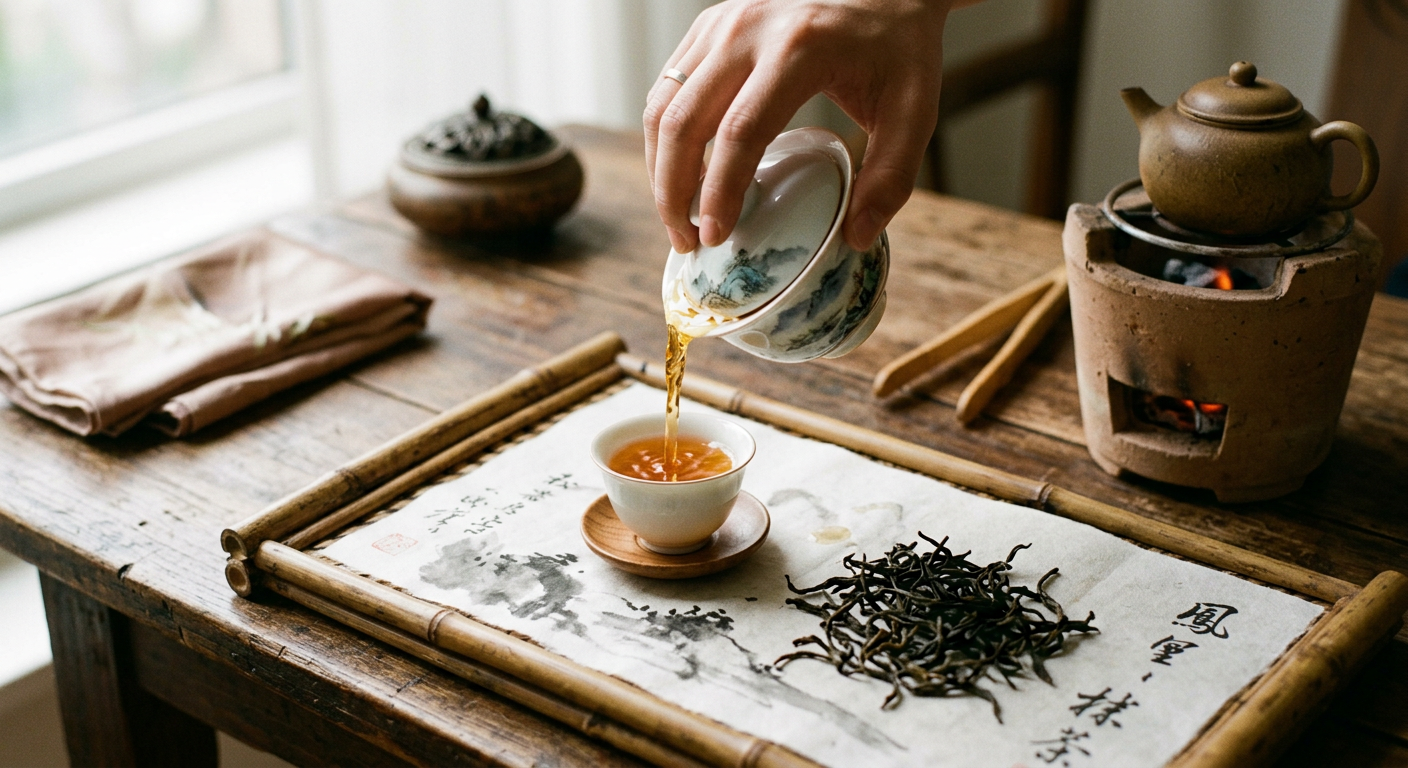
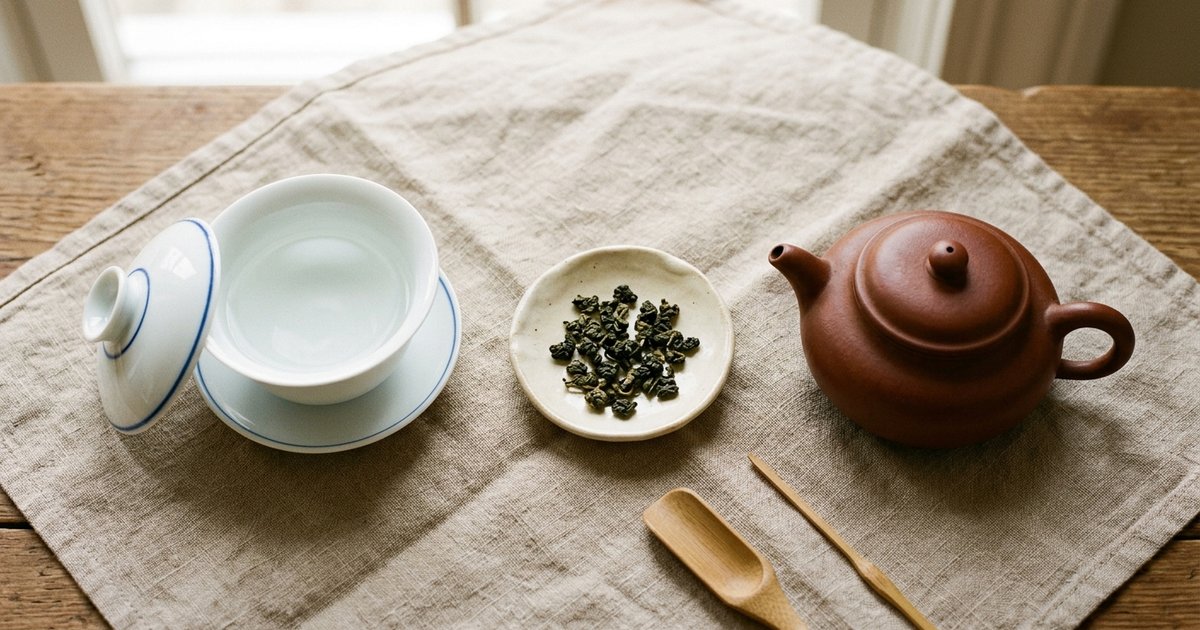
For Gongfu Cha in a small gaiwan or glass pitcher, use more leaf — roughly 4–5 g per 100 ml — and much shorter steeps of 20–30 seconds. The same leaves will yield five or more infusions, each one a little different from the last.
Water quality is half the recipe. The old texts call water the mother of tea, and green tea shows water flaws more clearly than darker teas. Use fresh, soft, lightly mineralized water: filtered tap, good spring water, or mountain water if you are lucky. Avoid distilled water, which tastes hollow, and avoid water that has been reboiled all morning, which loses the dissolved oxygen that carries fragrance[source:1].
Step-by-step: how to brew green tea
Whether you brew in a glass, a gaiwan, or a small teapot, the sequence is the same. Only the proportions change.
-
Warm the vessel. Rinse your cup or pot with hot water, then discard. A cold vessel drops the temperature the moment you pour, especially in winter.
-
Measure the leaf. Use a scale if you have one. Tea volume is deceptive: a fluffy Biluochun takes more space than a flat Longjing for the same weight.
-
Cool the water. Bring fresh water to a full boil, then let it cool for two to three minutes, or pour it into a fair pitcher first. Aim for 75 °C as a safe starting point.
-
Pour along the side. For glass brewing, pour the water gently down the inner wall rather than directly onto the leaves. This reduces agitation and keeps the liquor clear.
-
Steep briefly. For Western-style, start with 90 seconds. For Gongfu-style, start with 20 seconds. Taste before you add time.
-
Pour completely. Do not let the leaves sit in water between steeps. Separate the liquor from the leaves to stop extraction.
-
Re-steep. Good green tea gives multiple infusions. Add 10–15 seconds for each subsequent steep, or slightly raise the temperature. The later cups often show a quieter, sweeter side of the leaf.
Gongfu Cha vs. Western-style brewing
Both methods are valid; they simply ask different questions of the leaf.
Western-style brewing is the relaxed default: one teaspoon of leaf, one longer steep, and a cup you can carry to your desk. It is forgiving and works well for morning routines. Gongfu-style brewing is the concentrated conversation: more leaf, cooler water, shorter steeps, and many infusions that reveal how the leaf changes over time.
Green tea is less commonly brewed Gongfu-style than oolong, because its leaves are delicate and the window between "just right" and "overdone" is narrow. But a good Biluochun or Anji Baicha in a small gaiwan can be extraordinary — floral, creamy, and long in the aftertaste. If you try it, keep the steeps short and the water no hotter than 80 °C.
Four green teas worth knowing
China's green tea landscape is vast. These four are a useful starting map.
Longjing (Dragon Well) from Hangzhou, Zhejiang, is the most famous pan-fired Chinese green tea. The leaves are pressed flat during firing, giving the tea a chestnut or bean-like aroma and a soft, sweet finish[source:2]. The finest pre-Qingming Longjing is picked as one bud and one leaf, and commands prices that reflect its short season.
Biluochun (Green Snail Spring) from Suzhou, Jiangsu, is named for its tightly curled leaves. It is also pan-fired, but the shape traps fragrance, and good Biluochun can taste remarkably floral and fruity for a green tea[source:1].
Huangshan Maofeng from Anhui is a baked green tea. Its leaves carry a silvery down, and the liquor is pale gold with a clean chestnut aroma[source:2]. It is less famous abroad than Longjing but beloved in China for its clarity.
Mengding Ganlu from Sichuan is a curled green tea from the misty slopes of Mengding Mountain. The name means "sweet dew," and the tea lives up to it: bright, honeyed, with a gentle returning sweetness[source:2].
Common mistakes and how to avoid them
- Boiling water. This is the most common error. Green tea leaves scorch above 85 °C. Let the kettle rest after boiling.
- Oversteeping. Two minutes is often enough for a first steep. Three minutes can turn even good Longjing bitter.
- Too little leaf. Weak leaf gives weak feedback. Use a scale until your eye is trained.
- Reboiled water. Water that has been boiled repeatedly loses oxygen and flattens aroma.
- A cold vessel. Pre-warm your glass or pot, especially in cold weather.
- Storing green tea too long. Green tea is best within a year of purchase. Keep it sealed, away from light, heat, and strong smells.
Conclusion: the quietest cup
Brewing green tea well is less about ceremony than about paying attention. The leaf has already done the hard work — growing through winter, unfurling in spring, surviving the hot wok. Your only job is not to overwhelm it. Use water a little cooler, a little fresher, and a little kinder than habit suggests. Measure the leaf, time the steep, and pour with patience.
When you get it right, the cup is quiet: pale green, slightly sweet, with the smell of spring vegetables, chestnut, or fresh hay. It does not shout. It simply reminds you, one sip at a time, why green tea has been the daily drink of China for more than a thousand years.