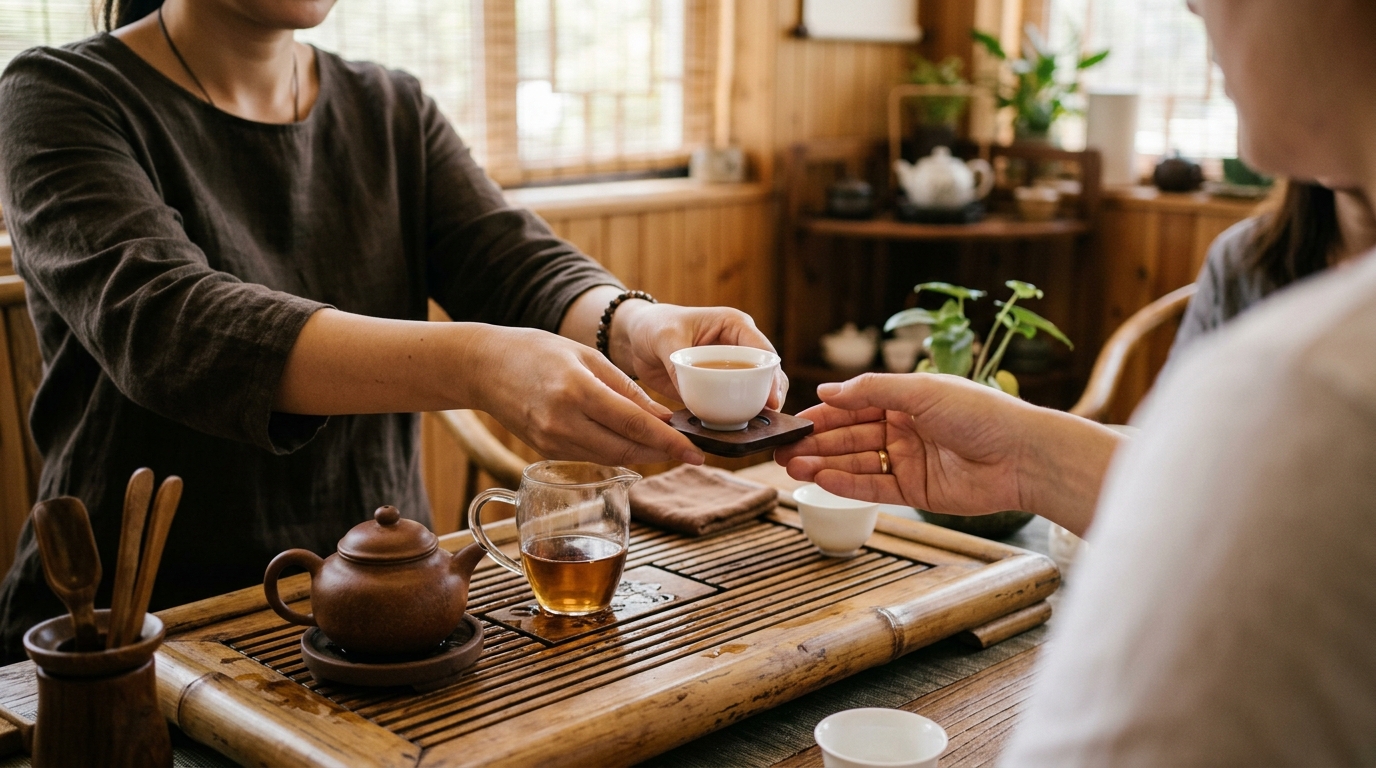
Chinese Tea Etiquette: How to Serve, Receive, and Say Thank You
Chinese tea etiquette is not a set of rigid rules invented to make guests nervous. It is a quiet language built around one idea: the person across the table matters. Every gesture — how the pot is turned, how the cup is handed over, how the guest taps the table — carries a small message of respect. Once you learn a few of these gestures, a Gongfu Cha session becomes easier, not harder.
Why tea etiquette matters
In China, tea has always been more than a drink. It is the first thing offered when a guest enters a home, the center of a business meeting, and the closing act of a family meal. The saying "客来敬茶" — "when a guest arrives, serve tea" — is one of the oldest habits of Chinese hospitality.
Etiquette grew out of this habit. It answers practical questions. How do you hand a hot cup without burning your guest? How does a guest thank the host without interrupting the conversation? How do you make sure everyone receives tea of the same strength and attention? The rules are old, but the feeling behind them is simple: make the guest feel at home.
The host's six steps
The classical sequence for serving tea to a guest follows six steps, listed on the Chinese government portal on traditional etiquette:
-
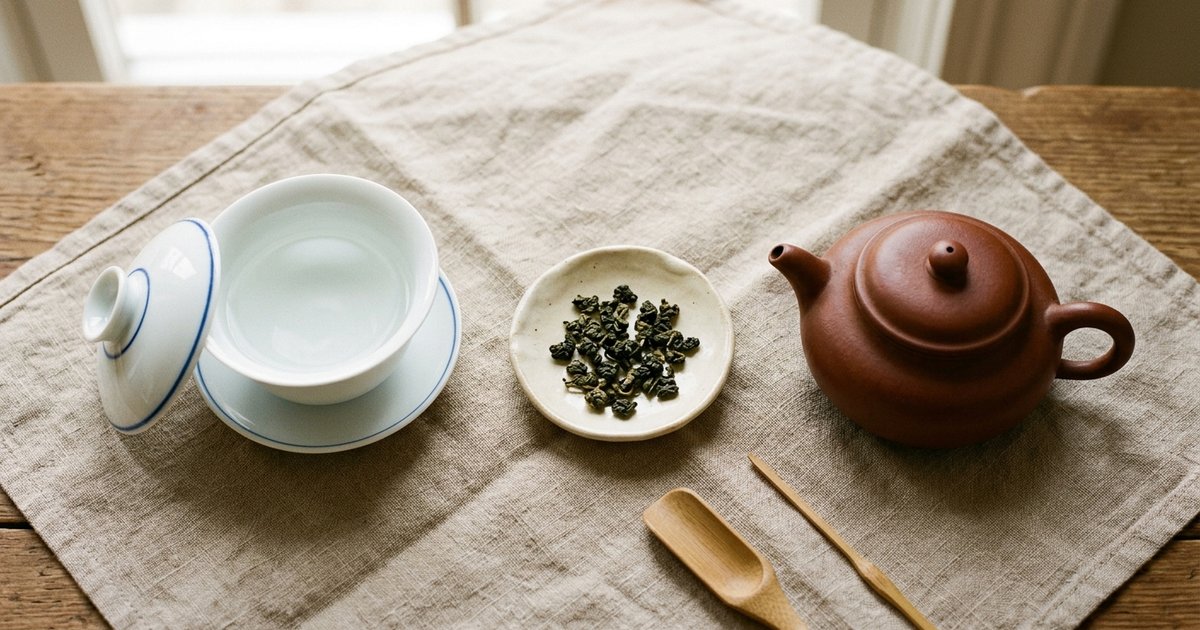
嗅茶 — Smell the dry tea. The host shows the dry leaves to the guest and explains what tea it is. The guest passes the leaves and smells them. This is the first introduction.
-
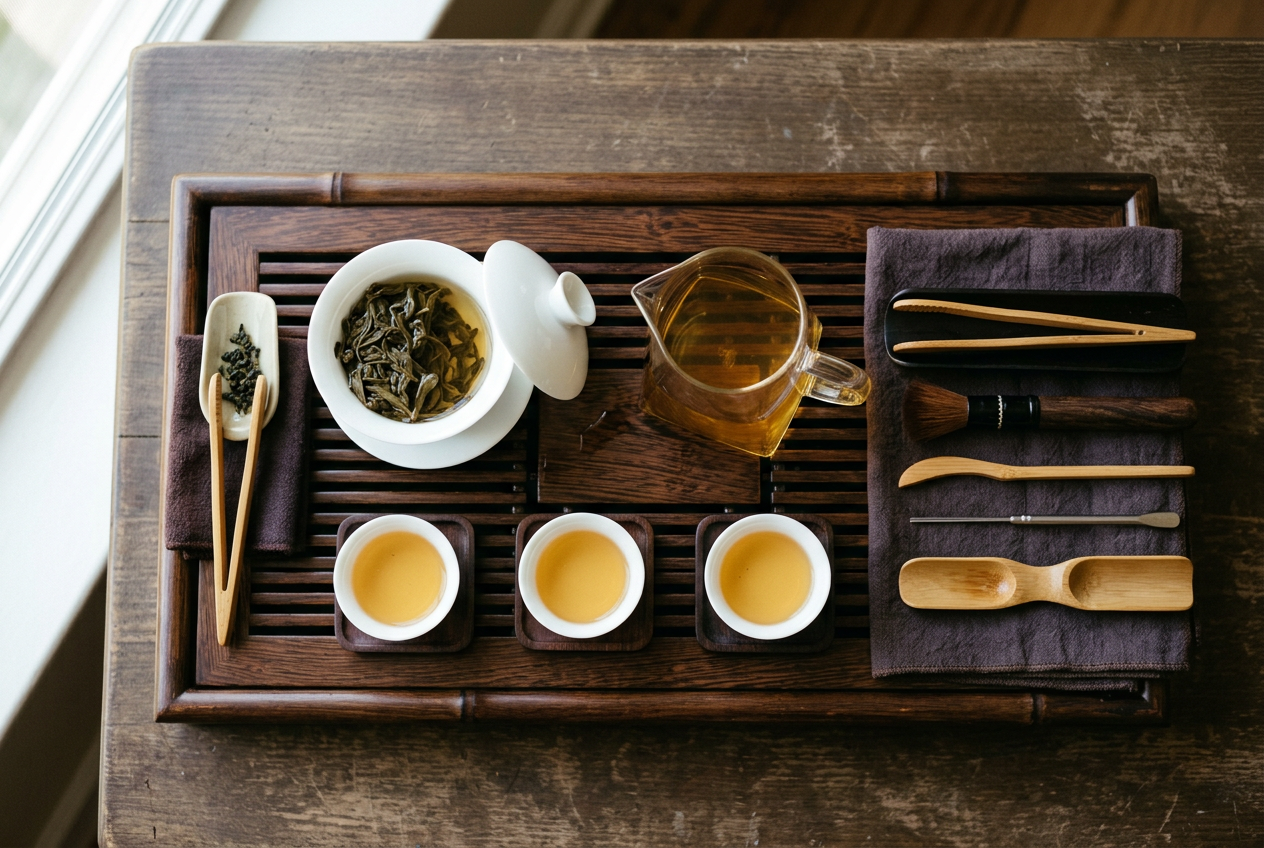
温壶 — Warm the pot. Hot water is poured into the empty pot or gaiwan, swirled, and poured out. Warm vessels keep the infusion hot and remove any stale smell.
-
装茶 — Load the tea. The host places the leaves into the warm vessel. In Gongfu Cha, the pot is filled roughly one-third full with oolong leaves.
-
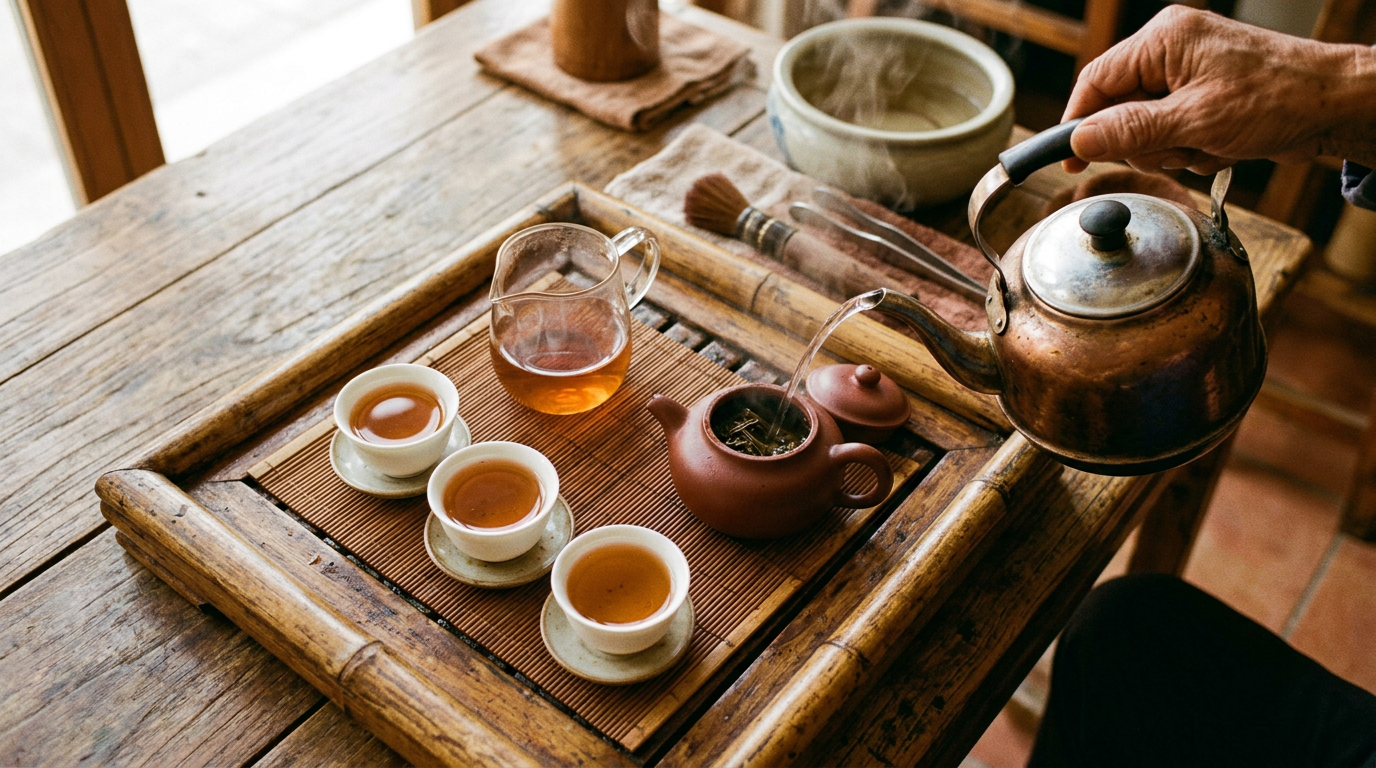
泡茶 — Brew the tea. Water is poured with the spout turned away from the guest. This small detail matters: the spout is never pointed at the person you are serving.
-
奉茶 — Serve the tea. The host holds the cup or saucer with both hands and offers it to the guest. The guest receives it with both hands.
-
品茶 — Invite the guest to taste. The guest looks at the color, smells the aroma, and sips slowly. A good tea is not meant to be gulped.
How to serve tea with both hands
When a host hands a cup to a guest, both hands are used. If the cup is small and hot, it may rest on a saucer or a small plate. The host's palms support the bottom; the fingers do not grip the rim.
The guest receives with both hands as well. A slight nod or a quiet "谢谢" is enough. In a formal Gongfu Cha session, the guest may also use the finger-tapping gesture instead of speaking.
The teapot spout should always face away from the guest. In a small Chaozhou tea tray, the pot sits with its spout pointing toward an empty space or the host. Pointing the spout at someone is considered dismissive, even aggressive.
The guest's response: finger-tapping thanks
The most famous Chinese tea gesture is the finger tap (kouzhi li, 叩指礼). Instead of saying thank you every time the cup is refilled, the guest taps one or two fingers on the table. The gesture comes from a Qing dynasty legend about the Qianlong Emperor traveling in disguise. A servant wanted to kowtow to the emperor without revealing his identity, so he tapped three fingers on the table to represent a bow.
Today the gesture has three common forms:
- A younger person thanks an elder: Tap the table with a closed fist, knuckle down, three times. This is the most respectful form.
- Peers thank each other: Tap with the index and middle fingers together, two or three times.
- An elder thanks a younger person: Tap one or two fingers lightly, once or twice. The elder does not need to show as much deference.
In practice, many tea drinkers simply tap two fingers no matter the situation. The important thing is the acknowledgment, not the exact form.
Drinking manners
Hold a small Gongfu cup between thumb and index finger, not wrapped in the whole hand. The rim is delicate, and the heat is easier to manage this way.
Sip in two or three small mouthfuls. The cup is small for a reason: it forces you to slow down. Between sips, smell the empty cup. A good oolong leaves a fragrance in the porcelain that can last longer than the tea itself. This is called beidiao xiang (杯底香), the cup-bottom fragrance.
If the tea is too hot, set the cup down and wait. Blowing loudly on the surface is considered impatient. Tea is meant to be drunk at the temperature the host intended.
Seating and turn-taking
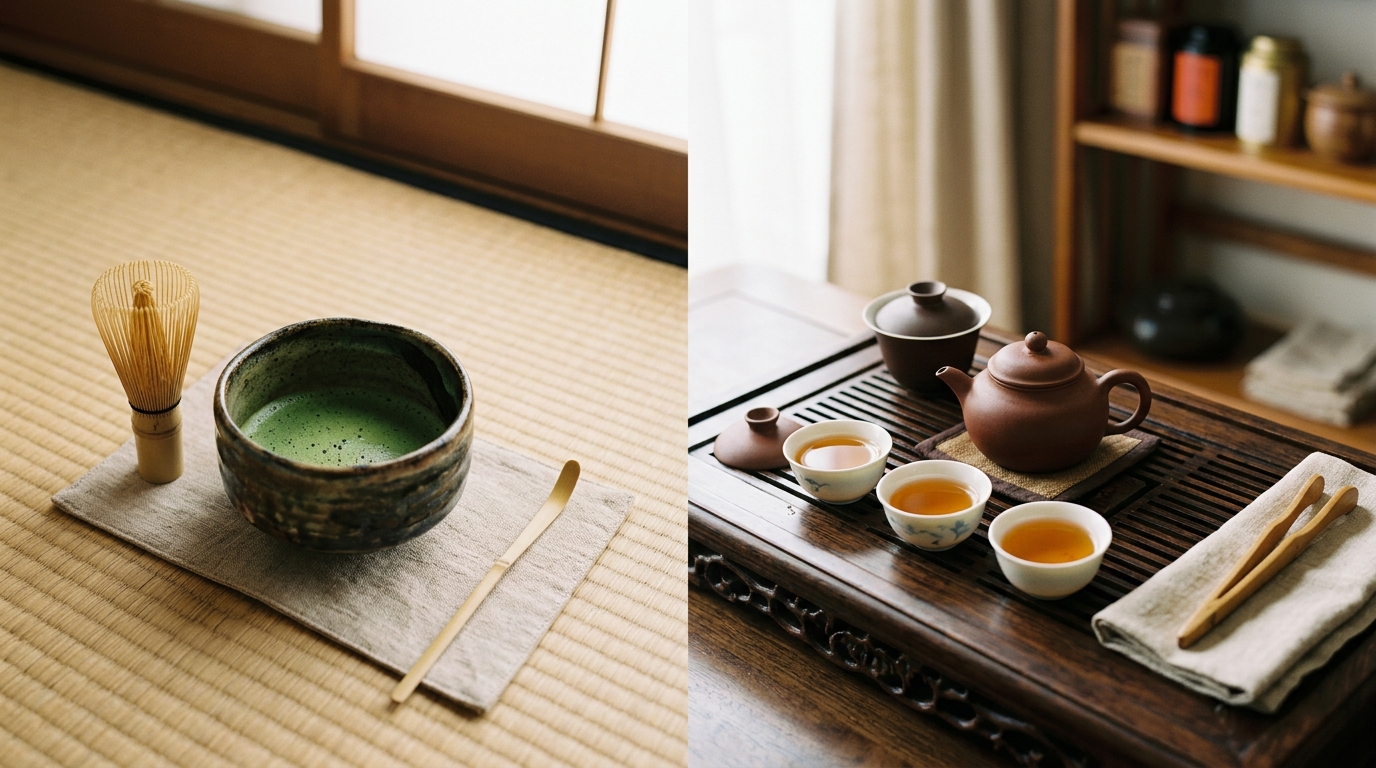
In a traditional Gongfu Cha session, there are usually three small cups on the tray, even if more than three people are present. The host fills the cups and places them in front of the guests. The guests drink, return the empty cups, and the host refills. The cups move in turn.
The guest of honor is served first, then the others in order of age or respect. If you are the host, watch your guests' cups. A good host refills before the cup is completely empty, keeping the rhythm of the session alive.
What to avoid
A few habits break the calm of a tea session:
- Do not point the spout at anyone. Turn it toward an empty space or yourself.
- Do not blow on the tea. Wait for it to cool.
- Do not drain the cup in one gulp. Small cups are meant for small sips.
- Do not leave the cup upside down. If you do not want more tea, leave the cup partially full or place the lid slightly askew on a gaiwan.
- Do not talk over the pour. The host is concentrating; the guest waits until the pour is finished.
Etiquette at home and abroad
Formal etiquette can be adapted. If you are serving tea at home to friends who are not familiar with Gongfu Cha, the most important gestures are enough: warm the pot, serve with both hands, keep the spout turned away, and receive the cup with a nod or a thank-you. The finger tap is optional.
What matters most is the intention. Etiquette is a way of showing that you have taken care with the water, the leaves, and the moment. If the feeling is right, the details can be learned slowly.
Frequently asked questions
Do I have to tap my fingers every time? No. A spoken "thank you" or a small nod is also acceptable. The finger tap is simply a quieter way to thank the host during a session.
Why should the spout not face the guest? It is an old sign of respect. The spout is associated with the direction of the pour; pointing it at a person is seen as impolite.
What if I do not like the tea? Drink a small amount anyway. In Chinese tea culture, finishing or nearly finishing the cup is a sign that you appreciated the host's effort. Leaving a full cup suggests rejection.
Who should be served first? The guest of honor or the eldest person present is served first, then the others in descending order of respect.
Can I ask for less tea? Yes. To signal that you do not want a refill, leave a little tea in the cup or place the lid of a gaiwan slightly ajar.